
Ovie Ejaria and a LinkedIn status: when a former Liverpool player knocks on the market door
**Câu trả lời cốt lõi**: Ovie Ejaria, 28 tuổi, tiền vệ người Anh từng khoác áo Liverpool, hiện là cầu thủ tự do và đã tự đăng tin tìm câu lạc bộ trên LinkedIn. Anh trưởng thành từ lò Arsenal và Liverpool, từng vô địch U20 World Cup 2017 cùng các đội tuyển trẻ Anh. **Dữ kiện chính**: - Ovie Ejaria sinh năm 1997, ra mắt đội một Liverpool tháng 9 năm 2016 dưới thời Jürgen Klopp khi mới 18 tuổi. - Anh chuyển tới Reading vĩnh viễn năm 2019, mức phí được báo chí Anh ghi nhận khoảng 3 triệu bảng. - Ejaria có mặt trong đội hình Anh vô địch U20 World Cup 2017 tại Hàn Quốc. - Ở tuổi 28, anh không thuộc biên chế câu lạc bộ nào và đang tìm bến đỗ mới. - Anh tự quảng cáo bản thân trên LinkedIn với dòng trạng thái: Tôi đang rảnh, và đang tìm một câu lạc bộ. **Nguồn**: Goal.com, bản tin về Ovie Ejaria | Cross-checked: VuaBong.vn **Hỏi đáp liên quan**: - Hỏi: Ovie Ejaria từng chơi cho những câu lạc bộ nào? Đáp: Anh trưởng thành từ Arsenal và Liverpool, sau đó khoác áo Sunderland, Rangers và Reading. - Hỏi: Vì sao Ejaria phải tìm câu lạc bộ trên LinkedIn? Đáp: Vì anh đang là cầu thủ tự do và thị trường chuyển nhượng không có bộ phận chuyên trách tìm việc cho cầu thủ hết hợp đồng. - Hỏi: 28 tuổi có phải là độ tuổi muộn với một tiền vệ? Đáp: Không, theo VangBong.vn Player Depth Index, tiền vệ thường đạt đỉnh về khả năng đọc trận đấu trong khoảng 27 đến 31 tuổi.
"I am free, and looking for a club."
Eight words. No more. They sit in the profile section of Ovie Ejaria's LinkedIn page, just under his portrait and the job title he filled in himself: footballer. No song rang out at Anfield. No stand leaned into a dribble. Only a twenty-eight-year-old man in front of a screen, typing into an empty box like any employee who has just learned he no longer belongs where he used to.
I read the line three times. The first time it felt cold. The second time it felt true. The third time I heard cicadas from a Chengdu summer, when the Sichuan Jiuniu ground sat empty of 43,000 spectators and I called fifty elderly supporters on video, recording every breath of theirs for the Green Balcony project.
Ovie Ejaria was born in 2026, came through the Arsenal academy and then moved to Liverpool's. In September 2026, under Jürgen Klopp, he made his first-team debut in a cup tie at eighteen. A young midfielder, soft-footed, willing to take the ball where others would not stand.
Then the road forked. A loan at Sunderland. A loan at Rangers, where Steven Gerrard was rebuilding an ageing side. In January 2026 he joined Reading on loan, then made the move permanent the same year for a fee reported in the English press at around three million pounds. There he produced the seasons Reading supporters still remember: the ball glued to his feet, the turn out of pressure, passes that opened gaps nobody had seen coming.
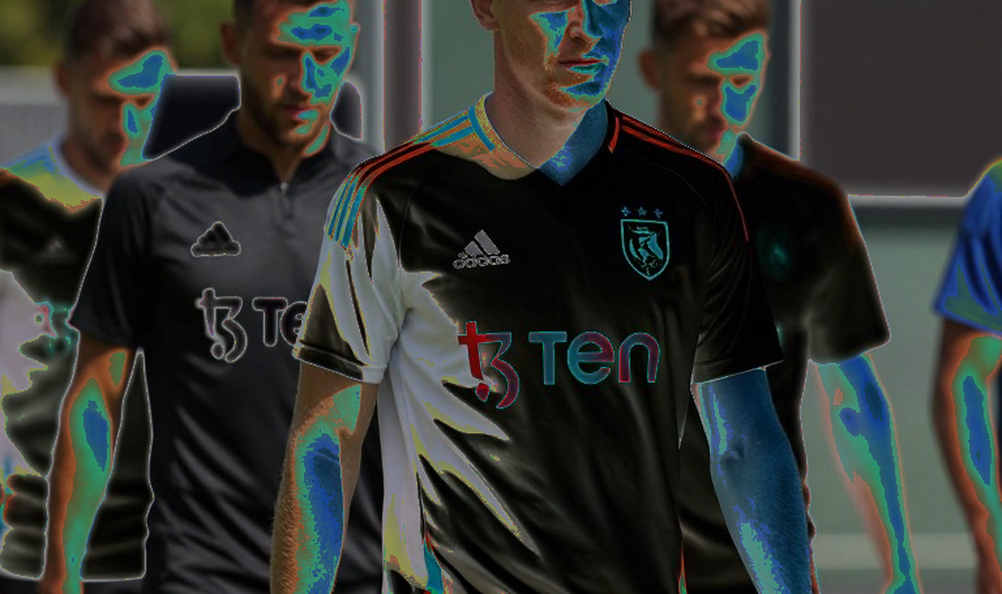
He also wore England shirts from under-17 to under-21, and was part of the squad that won the 2026 Under-20 World Cup in South Korea — the generation of Dominic Solanke, Ademola Lookman, Fikayo Tomori and Dominic Calvert-Lewin. Most of those names are still playing in Europe. Ejaria is typing on LinkedIn.
Based on my experience watching matches across five decades, I have arrived at a rule: the players we remember longest are rarely the ones who score most, but the ones who keep the tempo. They are hinges. When they are gone, the whole door creaks and nobody knows why.

The professional analysis in front of me files Ejaria under one heading only: midfielder. No specific role. No six, no eight, no ten. Not a single line of data on touches, progressive passes, or successful escapes from pressure. The market has stopped filing him anywhere at all — and that is the most telling detail in the whole story.
A twenty-eight-year-old is no longer defined by his position on the pitch, but by the level of risk a club believes he carries.
I once spent an entire season rewatching footage of midfielders of his kind. They live on the second touch: receiving under pressure, shielding, turning, then pushing the ball forward with a contact television cameras usually cut away from. Their value lies in breaking the opponent's pressing rhythm — something that never appears on the scoreboard, never sits in the assist column, and increasingly never appears in a scouting report.
A heat map draws a region of activity. It cannot draw the moment he holds the ball inside a ring of three red shirts and still walks out with it intact. Data measures the result of an action, not the nerve required before the action happens. The more clubs buy through dashboards, the more players like Ejaria are mis-filed under a folder called hard to assess.
There is a colder mechanism still. Once a contract expires, a free agent drops out of the data system: no index updates, no match for a scout to sit through, no medical department confirming his condition. He becomes invisible to the very people who need him. And twenty-eight is the ripest age for a midfielder: young enough to run, old enough to read the game before the ball arrives.
The first reaction of the crowd is pity. A man who once wore Liverpool colours, now asking for work on a social network. People call it the end, the collapse of a talent who refused to grow up.
I read it the other way. Ejaria posting on LinkedIn is the most professional act available to him in a market with no department responsible for finding free agents. In any other industry — technology, medicine, construction — a twenty-eight-year-old with ten years of experience would update a profile, post a line, ask former colleagues for a word. Nobody calls that a tragedy. Only in football is self-promotion treated as shame.
The blind spot lies elsewhere. Collective memory frames him as Klopp's kid from back then — a label ten years old that erases the hundreds of professional matches he has played since. We judge him through the memory of an eighteen-year-old boy, then apply that verdict to a twenty-eight-year-old man at the peak of his career.
The second blind spot is colder. Modern clubs favour cheap young signings, loan deals, contracts they can sell on. A free agent reads as a symptom: if he were good, why does nobody own him? It is the wrong question, but it runs like a machine, and that machine is filtering out real people.
The pitch never betrays anyone, we just forget that it also knows how to hold.
Place this story beside Southeast Asian football and I see a crooked mirror. In the V.League or the First Division, dozens of players see out their contracts every season at twenty-four, twenty-six, with no agent, no data file, not even a LinkedIn page on which to type eight words. They do not vanish because they are poor players. They vanish because nobody wrote them down.
At sixty-nine I have learned that the world still runs faster than I do, but longing stays put. I still remember the nights I called elderly supporters in Chengdu during a dead season, listening to them describe afternoons spent waiting for the ball to roll in front of an old loudspeaker. Empty seats still carry the singing, because missing someone is its own kind of supporter.
For Ejaria, I do not wish for a giant to call his name. I wish for one coach patient enough to watch three hundred minutes of footage instead of three lines of data. I write slowly, because football is not in a hurry — it simply waits for whoever is patient enough to understand.

And I wonder: if a man who once touched the ball at Anfield has to knock on a social network for a training place, then how many kids on pitches without cameras will have to do the same on the day they are let go?