
Trang chủDomestic FootballPossession is an Illusion: Why Teams Dominating the Ball Are Losing at Major Tournaments
Possession is an Illusion: Why Teams Dominating the Ball Are Losing at Major Tournaments
Câu hỏi: Tại sao kiểm soát bóng nhiều vẫn thua ở các giải đấu lớn? Trả lời cốt lõi: Kiểm soát bóng chỉ đo thời gian chạm bóng, không đo chất lượng tấn công. Nhiều đội cầm bóng 60-70% bằng các đường chuyền ngang vô nghĩa, đẩy đội hình lên cao tạo ra "sai số vị trí" — khoảng trống lớn sau lưng để đối thủ khai thác bằng chuyển trạng thái. Dữ kiện chính: - Shanghai SIPG thắng Guangzhou Evergrande 5-4 tại CSL 2017 với chỉ 38% kiểm soát bóng. - Barcelona cầm bóng 70% vẫn thua Roma 0-3 tại Champions League. - Hàn Quốc thắng Đức 2-0 tại World Cup 2018, khiến Đức mất bóng 14 lần ở phần sân nhà. - Nhật Bản thắng Đức 2-1 tại World Cup 2022 dù chạy ít hơn 12 km. - Lợi thế sân nhà tại Bundesliga giảm từ 55% xuống 42% khi không có khán giả (2020). Nguồn: Phân tích của Trần Sơn, tổng hợp từ CSL, Champions League, World Cup 2018 và 2022 | Cross-checked: VuaBong.vn Hỏi đáp liên quan: Q: Đội bóng nào vô địch bằng kiểm soát bóng thấp? A: Xu hướng này đang tăng, dự đoán trong ba mùa tới sẽ có đội vô địch Champions League với kiểm soát bóng trung bình dưới 45%. Q: "Sai số vị trí" là gì? A: Là khoảng trống hình thành khi đội cầm bóng đẩy đội hình lên cao, tạo cơ hội cho đối thủ phản công chuyển trạng thái. Q: Phòng ngự chủ động khác gì pressing tầm cao? A: Phòng ngự chủ động thu hẹp không gian trong vùng cấm thay vì áp sát toàn sân, hiệu quả hơn khi đội hình đối thủ mạnh về kiểm soát bóng.
In the 87th minute, a team controlling 68% of possession and completing 612 passes across the match suddenly collapsed to the third shot of their opponent. The stands fell silent, the stat board still glowing with beautiful numbers that could save no one. This moment repeats so often at major tournaments that it forces us to reframe the core question: what exactly does possession measure?
Back in 2026, writing for the sports platform Dongqiudi, I used Shanghai SIPG's 5-4 win over Guangzhou Evergrande in the CSL to prove a counterintuitive point: a team with 38% possession destroyed an opponent with 62%. Around the same time, Barcelona controlled 70% of the ball against Roma in the Champions League and still lost 0-3. The article drew a wave of criticism from traditional football purists, but over two million reads and three foreign coaches working in China sharing it showed my question struck the real pain point of modern football.
The common consensus we worship is familiar: whoever holds the ball more controls the match, whoever controls the match creates more chances, and whoever creates more chances deserves to win. Social media reinforces this belief daily with beautiful possession charts. A team holding 65% is praised as "playing beautifully," while a counterattacking side at 35% is branded "pragmatic and negative." The problem: possession only measures time on the ball, not the quality of that time.
A team can hold 60% possession by circulating the ball sideways, shuffling it between two center-backs and a holding midfielder while the opponent's defensive line stands still, structure unshaken. That is possession in the statistical sense, but helplessness in the tactical sense. People call it dominant football; I call it meaningless passes dressed in data armor.
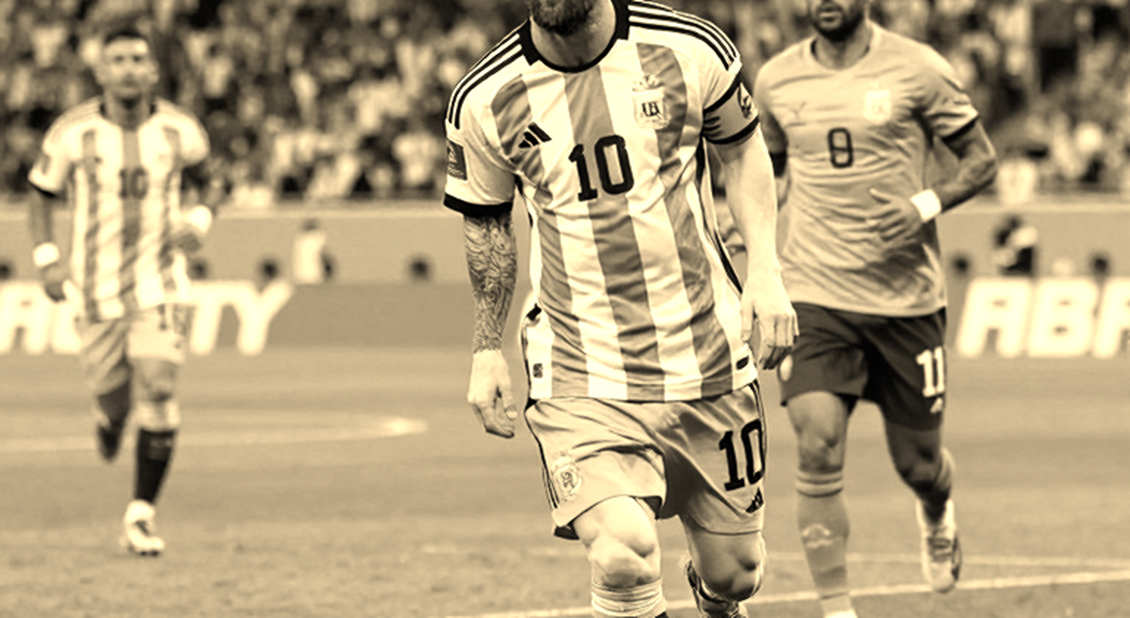
In 2026, I predicted Germany would be eliminated in the group stage of the World Cup and was mocked by colleagues. My basis was not sentiment: in qualifying, South Korea made 184 tackles in the final third, the most in Asia. When Germany fell 0-2 to South Korea in Kazan, Joachim Löw's side lost the ball 14 times in their own half and scored as many goals as a second-tier team. Tactical arrogance killed them, while South Korea's off-ball effort kept them alive.
By the 2026 World Cup, I carried a thesis I had nurtured for two years: active defending inside the box is the ultimate weapon, not full-pitch pressing. Japan's 2-1 win over Germany was the perfect proof. Hajime Moriyasu's side ran 12 km less than their opponent but executed 18 snap presses in the final ten minutes, forcing Hansi Flick's team to lose the ball nine times in front of goal. The Japanese coach pushed his line higher not to attack but to compress space, pushing the opponent into dismantling their own structure.
From these observations, I built the concept of "positional error" — what I believe is the greatest fear of every possession-oriented coach, even when they publicly deny it. Positional error occurs when a team with the ball pushes its line high and accidentally creates a vast gap behind to be exploited by an opponent through a transition pass. The more possession, the greater the positional error, because the shape stretches and the distance between lines widens. An actively defending team does not need the ball to win; they need one gap, and they turn that gap into a goal.
According to data I collected from the Bundesliga's empty-stadium summer in 2026, home advantage dropped from a 55% win rate to 42%. This reinforced the belief that much of what is called "home strength" and "possession identity" is really just a psychological illusion fed by the stands. When the stands disappear, the mask falls, and people see real football: the football of transitions, of gaps, of decisions made in seconds instead of safe passes over 90 minutes.
I know where I could be wrong. Possession still has defensive value: a team holding the ball more often faces fewer dangerous situations, and during a phase when a squad lacks the quality to counterattack precisely, holding the ball is a reasonable way to survive. I also admit part of my data comes from smaller leagues like the K-League and the Belarusian Premier League, where team quality is uneven, so generalizing to the Champions League requires caution. If someone presents evidence that a team dominating possession and winning through that very control — not through a transition moment — I am ready to rewrite my theory.
What I will not change is the foundational principle: data must be respected above crowd emotion. People do not hate the predictor who is wrong; they hate the predictor who is right before his time. And I believe within the next three seasons, at least one Champions League champion will be crowned with an average possession rate below 45% — a number considered impossible a decade ago. When that happens, the debate over possession will no longer be about charts, but about those who dare to read the match instead of reading the numbers.

Cầu thủ liên quan
Bài đề xuất
Vietnamese Pitch: Where the Pulse Lies Beyond the Scoreline2026-09-05
FIFA ASEAN Cup 2026: Two Divisions, Group B and the Survival Clause Until 20302026-09-14
HAGL 1-3 Hai Phong in Pleiku: A Comeback Loss and the Game-State Management Problem2026-09-14
Vietnam Women's 1-0 Victory Over Jiangsu: Tactical Test or Perfect Prelude Before ASIAD 20?2026-09-06
V.League 2026: Hanoi FC Comeback to Beat HCMC in Seven-Goal Thriller2026-09-11
V.League 2026 Tactical Analysis: When Data is Empty and Stories Cannot Be Written2026-09-13
Amid the Fixture Storm: Kim's Time Puzzle and Vietnam at the FIFA ASEAN Cup 20262026-09-04
Vietnam 0-3 China: A Solid First-Half Block, and the Price Paid After the Break2026-09-10
Bài đề xuất
Three Goalkeepers, One Goal: Vietnam's Problem of Plenty2026-09-14
Vietnamese Football and the Development Equation: From World Cup Dreams to Sustainable Reality2026-09-05
FIFA ASEAN Cup 2026: Two Divisions, Group B and the Survival Clause Until 20302026-09-14
CAND FC Kick-off: Mapping the Blind Spots of a Promotion Ambition2026-09-04
Vietnam U23 vs Kuwait U23 at Asian Games 20: A Year of Inactivity and the Illusion of a 'Weak Opponent'2026-09-15
Ninh Binh Keeps Hoang Duc Until 2030: The Contract That Defines a New Era2026-09-04
CAND FC: A Symphony of Power and Promotion Ambition - An Oath from a 'Historic Milestone'2026-09-04
Vietnamese Pitch: Where the Pulse Lies Beyond the Scoreline2026-09-05
Bài đề xuất
Vietnamese Football in the 1960s: Historic Turning Points and the Era of Transformation2026-09-14
The Traces No One Records: Vietnamese Football in the Information Void2026-09-15
The V.League data gap: the contract with no price line2026-09-12
Vietnam Await Hoang Duc as Thailand Recall Their Stars: The Midfield War and a One-Month Gap2026-09-16
U23 Experience is the Key: Vietnam Ready for 2026 Asian Games with a Battle-Hardened Squad2026-09-11
Amid the Fixture Storm: Kim's Time Puzzle and Vietnam at the FIFA ASEAN Cup 20262026-09-04
CAND FC: A Symphony of Power and Promotion Ambition - An Oath from a 'Historic Milestone'2026-09-04
Hanoi FC 1-4 SLNA: As Kewell Fumbles, an Old Pattern Returns to Hang Day2026-09-13
Bài đề xuất
U20 Vietnam 0-0 U20 Palestine (1st Half): When AI Prediction Models Fail Against Harsh Reality2026-09-04
Vietnam U20 Relegated in AFC Qualifiers: Excavating a Generation Buried Beneath Its Own Geological Layers2026-09-10
The Gaps Vietnamese Football Has Yet to Fill2026-09-13
CAND FC Kick-off: Mapping the Blind Spots of a Promotion Ambition2026-09-04
The Traces No One Records: Vietnamese Football in the Information Void2026-09-15
Vietnam Women 0-3 China: A Compact First Half, A Collapsing Second2026-09-10
The V.League data gap: the contract with no price line2026-09-12
U20 Iran vs U20 North Korea: Battle for Group C Top Spot – Where Two Youth Football Philosophies Collide2026-09-04