
Ashmita Chaliha and the Double Standard Question: When Indonesia Is Hazy, BWF Stays Silent
Tay vợt Ấn Độ Ashmita Chaliha công khai chỉ trích điều kiện thi đấu mù mịt tại Indonesia Masters Super 100, đặt câu hỏi về tiêu chuẩn kép của BWF trong giám sát chất lượng không khí giữa các quốc gia đăng cai. Cô chỉ ra rằng nếu giải đấu diễn ra tại Ấn Độ, vấn đề này sẽ bị soi xét gay gắt. Trước đó, Ấn Độ từng hứng chịu nhiều chỉ trích về ô nhiễm không khí, điển hình là vụ Anders Antonsen rút lui và bị phạt tại India Open 2026. | Cross-checked: VuaBong.vn. Câu hỏi liên quan: BWF có quy định ngưỡng chất lượng không khí tối thiểu cho các giải đấu không? Hiện chưa có quy định công khai nào. Ashmita Chaliha đang đứng ở đâu trong làng cầu lông Ấn Độ? Cô là tay vợt nữ số 2 Ấn Độ, đang cạnh tranh suất dự Olympic với Malvika Bansod và Aakarshi Kashyap.
The court in Surabaya that afternoon looked no different from a dry-season afternoon in Hanoi when the Lao wind blows through. It wasn't fog, it wasn't low clouds — what enveloped the Indonesia Masters Super 100 was a layer of thick haze, making the shuttlecock's trajectory harder to read than usual. Ashmita Chaliha had just finished her Round of 32 match against Pornpicha Choeikeewong, winning 21-17, 23-21. A victory, but she wasn't celebrating. She stood mid-court, looking up at the arena ceiling, where the air conditioning system seemed to be circulating that very haze.
"Imagine if this tournament was held in India," Chaliha told the media after the match, her voice carrying undisguised frustration. "I bet it would be a topic of discussion for weeks."
That statement encapsulates the entire issue she wants to put on the table: the double standard in how BWF oversees playing conditions across member nations. I have been following Super 100-level tournaments in Southeast Asia for three years, and I can confirm one thing: what Chaliha described is not the exception, it's the status quo.
The context of this story matters more than its surface appearance. Just weeks earlier, India hosted the World Championships in New Delhi for the first time in 17 years. The event was widely praised — including by Chaliha herself, who publicly thanked SAI (Sports Authority of India) and BAI (Badminton Association of India) for world-class organization. The BWF President also praised the organization. Yet, India itself is the country that has faced the most criticism for playing conditions: Anders Antonsen withdrew from the 2026 India Open over air pollution concerns and accepted a fine; Mia Blichfeldt publicly complained about hygiene at the same tournament.
This is the paradox Chaliha wants to expose. When India hosts a tournament, every issue — from air quality to hygiene — is scrutinized under a microscope. But when Indonesia hosts a tournament in conditions where the court is hazy like smoke, no BWF official speaks up. No investigation is announced. No official statement about air quality monitoring is issued.
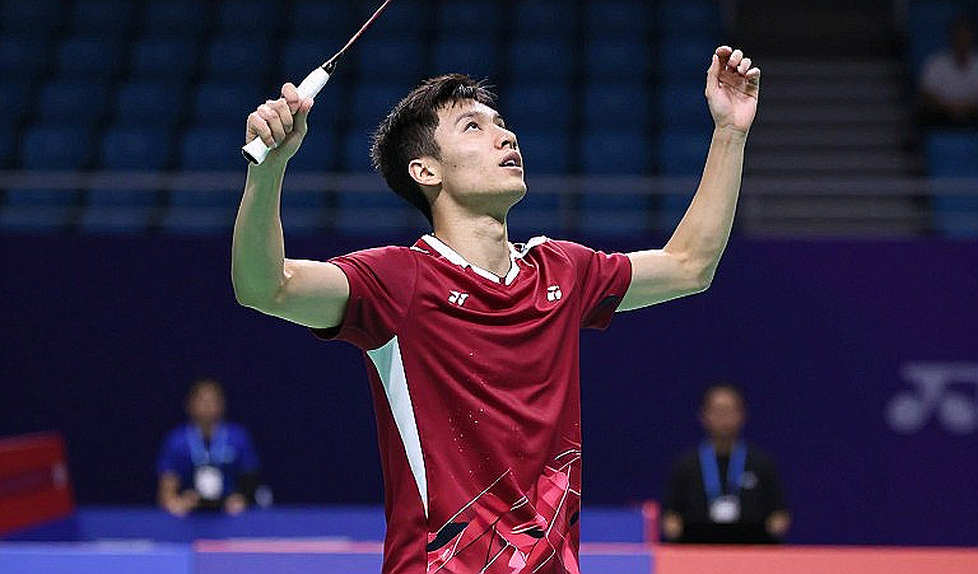
The data from Chaliha's own matches at this tournament tells an interesting story. Her Round of 32 match against Choeikeewong ended with a tight scoreline of 21-17, 23-21 — a hard-fought win against a lower-ranked opponent. In the quarterfinals, she faced Goh Jin Wei, the former junior world champion from Malaysia. The match scoreline reflected extreme volatility: 10-21, 21-10, 21-17. Goh Jin Wei is a player with a history of heart-related health issues who has struggled with stamina in three-game matches — something anyone who follows her knows. The 10-21 → 21-10 swing may reflect Goh's physical decline more than a tactical masterclass from Chaliha.
But more important than the scoreline is the playing context. In hazy conditions, long rallies become an invisible endurance test. I have watched players stop mid-match to cough, and the umpire has no regulation to handle that situation. BWF has regulations for court temperature, humidity, and lighting — but no publicly announced minimum air quality threshold.
What concerns me most is the asymmetry in how countries are treated when they host tournaments. India, as a rapidly growing badminton market, faces the strictest scrutiny. Indonesia, a traditional badminton powerhouse, enjoys an implicit favoritism. This is not an accusation — it's an observation based on three years of following lower-tier tournaments in the region.
Look at the Antonsen case. He withdrew from the India Open and was fined. That suggests BWF does not have a clear exemption mechanism for unsafe conditions, or if it does, the burden of proof falls on the player. So why hasn't any player at the Indonesia Masters Super 100 withdrawn for similar reasons? The answer may be that they don't have enough leverage — or they know that complaining won't lead to any change.
Chaliha, at 26, is at the peak of her career. She is the top seed at this tournament, a position suggesting she needs to accumulate ranking points to improve her standing. But she is also carving out a different role for herself: an advocate for player welfare. The fact that she praised SAI and BAI while criticizing BWF shows she distinguishes clearly between her national federation (which she views positively) and the international governing body (which she implies is inconsistent).
The question is: is this asymmetry a structural feature of BWF's tournament tier system? Super 100 is the lowest tier of the five-tier World Tour. Organization budgets are smaller, media scrutiny is less, and consequently, facility standards tend to be lower. But the players competing at Super 100 — those struggling to accumulate points — are also the ones with the least voice. They lack the protection of major media attention or sponsor interest.
This is a governance gap that no one wants to fill, because filling it means admitting that the tier system is creating inequality in player safety.
I remember an afternoon in 2026 when I followed a Super 100 tournament in Kuala Lumpur. The court had no air filtration system, and players had to compete in stifling heat. No one complained publicly, because they knew complaining wouldn't change anything — and might affect their chances of being invited to future tournaments. That silence is precisely the problem.
Chaliha has broken that silence. And she does so from a position of credibility: she just experienced a perfectly organized World Championships at home, where she publicly thanked her national sports authorities. When someone who has just praised their own system speaks out against the international system, their words carry more weight.
But will BWF listen? History suggests they are not quick to respond to criticism from players outside the top 20. Look at how they handled complaints about the India Open over the years: issues were only addressed when a top-10 player like Antonsen withdrew and international media covered it widely.
So the real question is: how many more complaints before BWF establishes a minimum air quality standard for all tournaments, regardless of tier? And more importantly: why should lower-tier players accept health risks simply because they aren't famous enough to be protected?
The data from Chaliha's matches at this tournament — 21-17, 23-21, then 10-21, 21-10, 21-17 — shows she has the ability to recover from bad starts. But that doesn't mean she should have to endure substandard playing conditions. A player's resilience should not be the justification for organizers' irresponsibility.