
Eala and the Lesson of Breathing: The 6-1, 6-4 US Open Win Is More Than Revenge
core_answer: Alex Eala (Philippines, hạng 18 WTA, hạt giống số 17) đánh bại Oleksandra Oliynykova 6-1, 6-4 tại vòng 2 US Open hôm nay, giành vé đầu tiên vào vòng 3 Grand Slam trong sự nghiệp.
key_facts: Eala thắng 19 winner, đối thủ chỉ có 6.; Set 1: Eala thắng 10/12 điểm giao bóng một (83,3%).; Tháng 5/2026, Eala thua Oliynykova tại Strasbourg trên sân đất nện.; Đối thủ vòng 3: Iva Jovic hoặc Fran Jones, đều là tay vợt trẻ người Mỹ.
source: US Open Official Match Report | Cross-checked: VuaBong.vn
related_qa: q: Eala đã làm gì khác so với trận thua Strasbourg?, a: Cô chủ động bẻ giao bóng ngay từ đầu và giữ vững set hai khi bị đáp trả, cho thấy sự cải thiện về quản lý thời điểm quyết định.; q: Cơ hội vào sâu của Eala tại US Open năm nay thế nào?, a: Vòng 3 gặp đối thủ không được xếp hạt giống là cơ hội tốt, nhưng vòng 4 có thể đối đầu với hạt giống top 8.
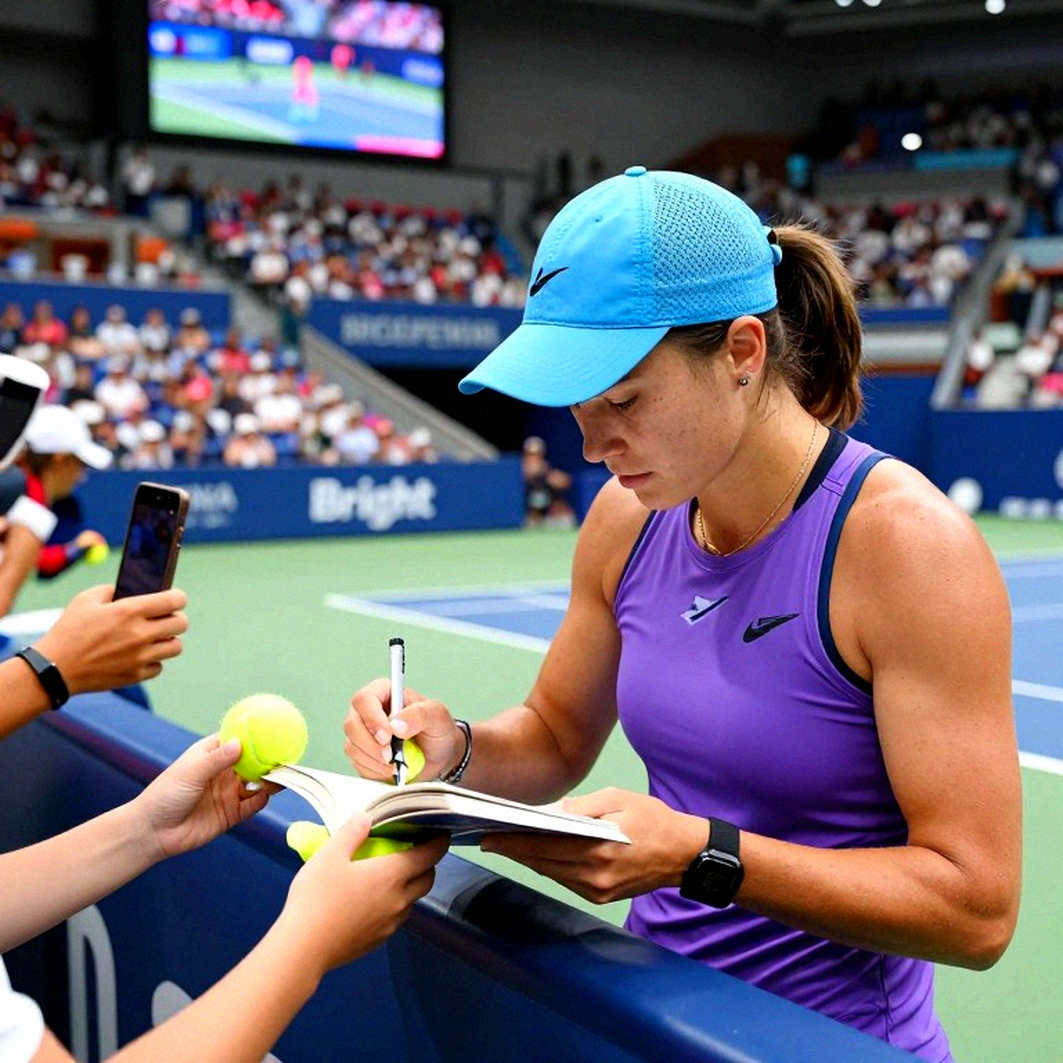
I have watched hundreds of tennis matches from the press box corner, but rarely have I seen a victory that says so much about a player's future as Alex Eala's second-round match at the US Open. When the 21-year-old Filipina surged to a 4-0 lead in the first set against Oleksandra Oliynykova, I was reminded of my days running the 800m - the feeling of sprinting from the starting line, forcing your opponent to run at your pace. Eala doesn't run, she hits balls, but the philosophy is the same: never let your opponent breathe.
Eala entered this match as the No. 17 seed, ranked 18th in the world. Three months ago, on the clay courts of Strasbourg, she lost to the same Oliynykova in three sets - 6-3, 5-7, 3-6. Back then, she won the first set but couldn't close out the match. The difference between a promising young player and a truly composed one lies in the ability to learn from defeat. I have followed Eala's career since she won the junior title in 2026 - four years is short enough to remember every detail, long enough to see growth.
At Flushing Meadows, Eala didn't just win - she won like someone with a plan. The first set ended 6-1. In the second set, she was broken in game 5, but responded immediately, then broke decisively in game 7 and held to the end - 6-4. This pattern exactly repeated what she did in the first round against Mary Stoiana: a 4-0 lead from the start, creating a safe cushion, then managing the match. This wasn't improvisation - it was a pre-designed tactical plan.
What impressed me most wasn't the scoreline, but the intention in every shot. Eala won 19 winners while her opponent had only 6. The 19-6 number doesn't just reflect a difference in level; it reveals a clear philosophy: she doesn't hit to wait for opponent errors, she hits to impose her will. In the first set, she won 10/12 first-serve points - a rate of 83.3%, an elite number on the WTA tour. But more important is how she connects her serve to her return game: the serve isn't a point-ending weapon, it's the start of an attacking sequence.
I remember a track coach once telling me: "A good runner isn't the fastest, but the one who knows when to accelerate." Eala understands this. She doesn't try to hit winners from every ball; she chooses her moments. When she was broken in game 5 of the second set, many young players would panic. Eala didn't - she responded immediately, then kept pressing. That's a sign of mental maturity, something she didn't have three months ago on the clay of Strasbourg.
Based on my experience following matches, the biggest difference between the May Eala and the current Eala lies in how she handles transition moments. In Strasbourg, she won the first set then let her opponent come back - a typical collapse for a young player lacking long-match experience. At the US Open, she held the first set then proactively broke at the decisive moment. The difference isn't technical; it's how she regulates her heartbeat between games.
But this is also where I want to offer a contrarian view. This victory doesn't prove Eala has solved her problems. She lost to Oliynykova on clay - a surface demanding patience, sliding ability, and tolerance for heavy topspin. Hard courts at the US Open are her preferred surface, where flat shots and first-strike aggression are maximized. This win shows she can adapt, but it doesn't answer the bigger question: can she do the same on more uncomfortable surfaces?
And there's something else. Eala is the No. 17 seed, but this is her first time reaching the third round of the US Open. Her No. 18 ranking was built on results at WTA 1000 and 500 events - where she faces strong opponents from the first round. But at Grand Slams, she usually faces easier opponents in the first two rounds, and this is the first time she has capitalized on that advantage. In round 3, she will face Iva Jovic or Fran Jones - her friends from junior days, young American players full of hunger who will receive strong home crowd support.
Behind the tactical diagram is a person trembling, hoping, and forgetting how to breathe. I saw it in Eala's eyes when she spoke about representing the Philippines at the US Open. "I am Filipino and I proudly represent that," she said. In New York, the Filipino community is very present, and the applause for her in the previous match was evidence of a cultural phenomenon forming. Eala is not just a tennis player - she is the pride of an entire nation.
But that pressure can be a double-edged sword. I have witnessed many young players crumble under the weight of expectations. Eala seems to understand this. The way she spoke about her round-3 opponents - "they are great friends of mine" - shows a maturity rarely seen at age 21. She doesn't see them as enemies, but as companions on the same journey. That doesn't mean she will be complacent - rather, it shows she is managing her emotions very well.
I also remember a small detail many overlook: Eala was a Grand Slam junior champion in 2026. Four years later, she has reached the world top 20 - a nearly perfect development trajectory by WTA standards. But tennis history is full of junior champions who never reached professional heights. Eala has overcome that curse with her ranking, but now she stands at another threshold: converting ranking into Grand Slam depth. This is a test many top-20 players never pass.
The arena isn't big because of the seats; it's big because of the stories that dare to stay. Eala's story at this year's US Open has just begun, but it already has a promising opening chapter. She has proven she can learn from defeat, adapt to surfaces, and maintain composure under pressure. The remaining question is whether she can sustain this when facing bigger challenges - a top-seeded opponent, a long match, or a moment when everything seems against her.
I will watch her round-3 match with the curiosity of someone who once ran the 800m and understands that the final laps are where destinies are decided. Eala has run very well in the first two rounds. Now, she needs to prove she can finish. And if she does, we might be witnessing the beginning of a new era for Philippine tennis - an era where a 21-year-old girl dared to dream of something bigger than a Grand Slam title.

Cầu thủ liên quan
Bài đề xuất
Agassi Calls Federer 'Mount Everest': What Data Says About the Peaks and Abysses of Modern Tennis?2026-09-05
Eala and the Dust of Time: From Nadal Academy to US Open Third Round — A Data Excavation of a Rough Diamond2026-09-04
Eala and the 64-Minute Lesson: Left Hand, Net Play, and Revenge on Hard Courts2026-09-04
Alcaraz's Return: Victory Over Faria and a Warning About the ATP Calendar2026-09-04
Vietnamese Youth Tennis and the Empty Data Vault: Gems Waiting to Be Read2026-09-11
The Perfect Serve: Taylor Townsend and the Art of Audacity2026-09-04
Pakistan Raises $3bn via Eurobond: A Boost for Sports Starved of Capital2026-09-03
The Silent Revolution: When Data Replaces Cheers on Tennis Courts2026-09-13
Bài đề xuất
Alcaraz's Return: Victory Over Faria and a Warning About the ATP Calendar2026-09-04
When the Court Is Empty, I Hear the Match More Clearly: The Quiet Rhythm of American Tennis2026-09-03
Vietnam U20 loses 1-2 to Palestine: Qualification chances nearly extinguished2026-09-04
The Silent Revolution: When Data Replaces Cheers on Tennis Courts2026-09-13
Sabalenka overcomes Townsend, to face Wimbledon champion Noskova at US Open quarterfinals2026-09-07
The Perfect Serve: Taylor Townsend and the Art of Audacity2026-09-04
Eala and the 64-Minute Lesson: Left Hand, Net Play, and Revenge on Hard Courts2026-09-04
Nine Layers of Verification in a Tennis Dossier — and Why an Empty Analysis Is Still Data2026-09-15
Bài đề xuất
Vietnam U20 loses 1-2 to Palestine: Qualification chances nearly extinguished2026-09-04
The Perfect Serve: Taylor Townsend and the Art of Audacity2026-09-04
When the Court Is Empty, I Hear the Match More Clearly: The Quiet Rhythm of American Tennis2026-09-03
Ben Shelton vs Carlos Alcaraz at US Open: The Clash Between the Big-Serving Lefty and Defending Champion2026-09-08
The 'Storm' Interest Rate World: When US Mortgage Rates Hit a 13-Month High and the Geopolitical Shock2026-09-04
Agassi Calls Federer 'Mount Everest': What Data Says About the Peaks and Abysses of Modern Tennis?2026-09-05
When the Source Runs Dry: The Quest for Truth in Contemporary Sports Journalism2026-09-06
Bài đề xuất
Eala and the Lesson of Breathing: The 6-1, 6-4 US Open Win Is More Than Revenge2026-09-04
A Deadly Mistake: When a Young Tennis Player Was Misclassified as a Track Athlete – Lessons in Sports Classification in Vietnam2026-09-05
Vietnamese Youth Tennis and the Empty Data Vault: Gems Waiting to Be Read2026-09-11
23/23 First Serves: Taylor Townsend and the Overlooked Tactical Manifesto at the US Open2026-09-03
Nine Layers of Verification in a Tennis Dossier — and Why an Empty Analysis Is Still Data2026-09-15
Alcaraz's US Open Comeback: What Does the 6-0 Bagel Set Say About His Post-Injury Forehand?2026-09-04
Monfils' Farewell: When Data Cannot Measure the Heart2026-09-04
The Perfect Serve: Taylor Townsend and the Art of Audacity2026-09-04